Posts

Showing posts with the label archaeology

DEMETER’S CULT CENTERS:

Image
  By Mary Harrsch - Own work, CC BY-SA 4.0, https://commons.wikimedia.org/w/index.php?curid=96137324 To preface this short section on the cult centers of Demeter, here is what Wikipedia has to say about it:   Major cults to Demeter are known at Eleusis in Attica, Hermion (in Crete), Megara, Celeae, Lerna, Aegila, Munychia, Corinth, Delos, Priene, Akragas, Iasos, Pergamon, Seli nus, Tegea, Thoricus, Dion (in Macedonia), Lykosoura, Mesembria, Enna (Sicily) and Samothrace.   An ancient Amphictyony, probably the earliest centred on the cult of Demeter at Anthele (Ἀνθήλη), which lay on the coast of Malis south of Thessaly. This was the locality of Thermopylae.   OK, so, Anthele was the most ancient cult center devoted to Demeter. That’s great, of course; but I had no idea where Anthele was when I read this, and the quote gives no idea of how old the cult center there was except to say, “probably the earliest”, so I went to the source That source is none other than the “Fa...

A MINOAN DEMETER?

Image
  Demeter and Metanira. Detail of the belly of an Apulian red-figure hydra, ca. 340 BC. By Varrese Painter - User:Bibi Saint-Pol, own work, 2008, Public Domain, https://commons.wikimedia.org/w/index.php?curid=3839471 In the interest of hopping a little more briskly along this rabbit hole, I have decided to use the simple quote from John Chadwick – a noted Aegean scholar – that I found in Wikipedia and move on. Here it is:   The earliest recorded worship of a deity possibly equivalent to Demeter is found in Linear B Mycenean Greek tablets of c. 1400-1200 BC found at Pylos. The tablets describe worship of the “two queens and the king”, which may be related to Demeter, Persephone and Poseidon.   Apparently, the indicator is the name  i-da-ma-te , or  Demeter . And there is the date: 1400-1200 BC. That’s early, people. Real early. It indicates that Demeter was an established deity by no later than the Mycenaean period…and possibly earlier. On even earlier Linear A t...

HOW OLD WAS DEMETER?

Image
  A Greek fresco depicting the goddess Demeter, from Panticapaeum in the ancient Bosporan Kingdom (a client state of the Roman Empire), 1 st  century AD, Crimea. By Sovenok212 - Own work, CC BY-SA 3.0, https://commons.wikimedia.org/w/index.php?curid=21242584  I know you shouldn’t ask a woman’s age. (I live in southern California. Of  course , I know that). But I think that, in this case, I might be pardoned for asking: Just how old  was  Demeter? In answer, we know that Demeter was known to at least three ancient societies: the Minoans, the Egyptians, and the Arcadians. (Whoever  they  were. More on that later). So, if Demeter can be established as an integral part of those groups – that is, if they associated her with one of their goddesses, dedicated cult objects to her, and created cult centers for her – we can say that she belonged to those cultures and was very ancient, indeed. Let’s start with the Minoans and Mycenaeans. Demeter’s name is fo...

POSEIDON AND DEMETER: HAPPY COUPLE, OR VIOLATOR AND VICTIM?

Image
By Alvesgaspar - Own work, CC BY-SA 4.0, https://commons.wikimedia.org/w/index.php?curid=43569142 Although the above sculpture depicts the rape of Demeter’s beloved daughter, Persephone, or Proserpina, by Hades, God of the Underworld, in the myths of the ancient world there was another, earlier rape: that of the earth goddess, Demeter, herself. In Demeter’s case, the rapist was the god of earthquakes, water, and horses, as well as the Underworld: Poseidon. I chose to use Bernini’s  The Rape of Proserpine  as the illustration of this post because I felt it vividly depicted the shock and horror of this ancient outrage. The two stories might have been a “twinning”, i.e.: Persephone’s later rape by Hades may just possibly have been a retelling of the original violation of Demeter by Poseidon. Here’s the initial story:   When Demeter was wandering in search of her daughter [Persephone], she was followed, it is said, by Poseidon, who lusted after her. So, she turned, the story ...

ACHILLES AND PENTHESILIA: NECROPHILIA, OR SACRED MARRIAGE?

Image
  By ArchaiOptix - Own work, CC BY-SA 4.0, https://commons.wikimedia.org/w/index.php?curid=88625666 Rage. The great bard, Homer, employed wrath as the driving force behind the events of his  Iliad , including the deaths of his leading man, Achilles – the warrior-hero of the Greeks – and the Amazon Wonder Woman, Penthesilea. For, had the warrior woman not first killed one of her own, she would not have been compelled to find redemption in battle against the Greeks. Perhaps, she would instead have died somewhere on her native steppes, unremembered. Such a death – our loss, as well as that of Penthesilea and her people – would have been sad, indeed. Her name would have then been forever lost to time and anonymity. That ancient name conveyed some connotation of sadness:  penthos  meant “sorrow” in Ancient Greek. The second syllable of the warrior queen’s name is not so easy to decipher. Maybe, it came from the Latin verb for “silence”:  sileo . Or perhaps it was som...

PICTISH HUNTING PARTIES VERSUS WAR PARTIES…WITH A SIDENOTE ON WAR DOGS

Image
  By Simon Burchell - Own work, CC BY-SA 3.0, https://commons.wikimedia.org/w/index.php?curid=7405285 Pictish Hunting Parties vs. War Parties :             I would like to start with the standing stones at Meigle, where Queen Guinevere is rumored to have been buried. At the top of one of the most prominent stones prances a large, mounted rider, cloaked and using a bridle bit, with what appears to be a small cavalry brigade, or at least a company of mounted hunters, below him. The fact that this is the largest figure, depicted above all the others and virtually alone (more on that in a minute), indicates a figure of paramount importance: a chieftain or king. While Norma Lorre Goodrich believes this leader is King Arthur, I think it is the queen’s loyal champion: Lancelot, a great king in his own right. The riders below the leader may be anonymous loyalists, queen’s men, or else the king’s right hand and heir apparent, Gawai...

PICTISH CAVALRY: AN EQUESTRIAN WEIGHT WATCHERS?

Image
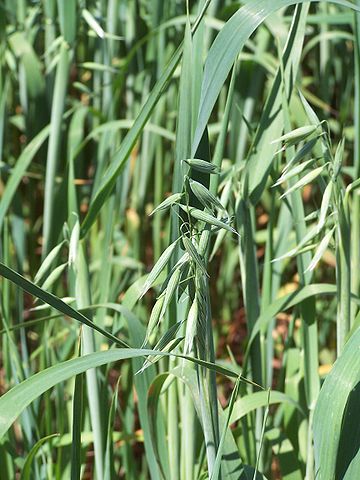
  By Henrik Sendelbach, CC BY-SA 3.0, https://commons.wikimedia.org/w/index.php?curid=256522 Although I’m sure the Pictish sculptors had no intention of spending valuable time and energy carving sluggish, sickly animals into their masterpieces, the horses they did carve were clearly of the best quality. Vital, and evincing high energy and spirits, they prance across the stones, tossing their long manes in the stiff Scottish breeze. To affect this great health and energy, the Picts must have set aside a crop of grain intended solely for their animals. Oats are the preferred horse feed nowadays, but they were introduced late to Scotland. How late? And were they introduced in time to be utilized by our Pictish friends? Here, I again refer to Irene Hughson, who tells us that both wild and cultivated oats would have been well-established by the Pictish heyday.             But what about grass? Everybody knows that horses like e...